1573년까지 1만 명이 살았던 성하마을 이치조다니. 교토의 햐키야코(백귀야행)로 대표되는 요괴 문화를, 당시 아사쿠라 성하마을 주민의 눈으로 새롭게 창조합니다. 1만 명이 살던 마을의 활기를 요괴를 통해 표현하는 프로젝트입니다.
SCROLL
About
이치조다니에 요괴가 나타나다
1573년까지 1만 명이 사는 성하마을이었던 이치조다니. 아사쿠라 가문의 당주는 교토의 문화를 받아들여, 일본의 새로운 중심 도시 「도읍」이 되고자 힘썼습니다.
그러나 1573년 8월 18일, 노부나가의 군대가 불을 질러 모든 것이 타 버렸습니다. 건물이 지금까지 남아 있었다면 「저 저택의 우물에서 밤마다 두레박 요괴가 나타난다」 같은 전설이 틀림없이 전해졌을 것입니다.
여러 교토 문화가 전해지는 가운데, 요괴 전설이 아사쿠라 서민 문화로 발전했을 가능성은 큽니다. 이 프로젝트는 그 「잃어버린 전설」을 창조하는 것을 목적으로 합니다.
♦
Illustrators & Designers
캐릭터 디자이너
Character designer (first series)
니시노 카인
Born in Echizen, Fukui
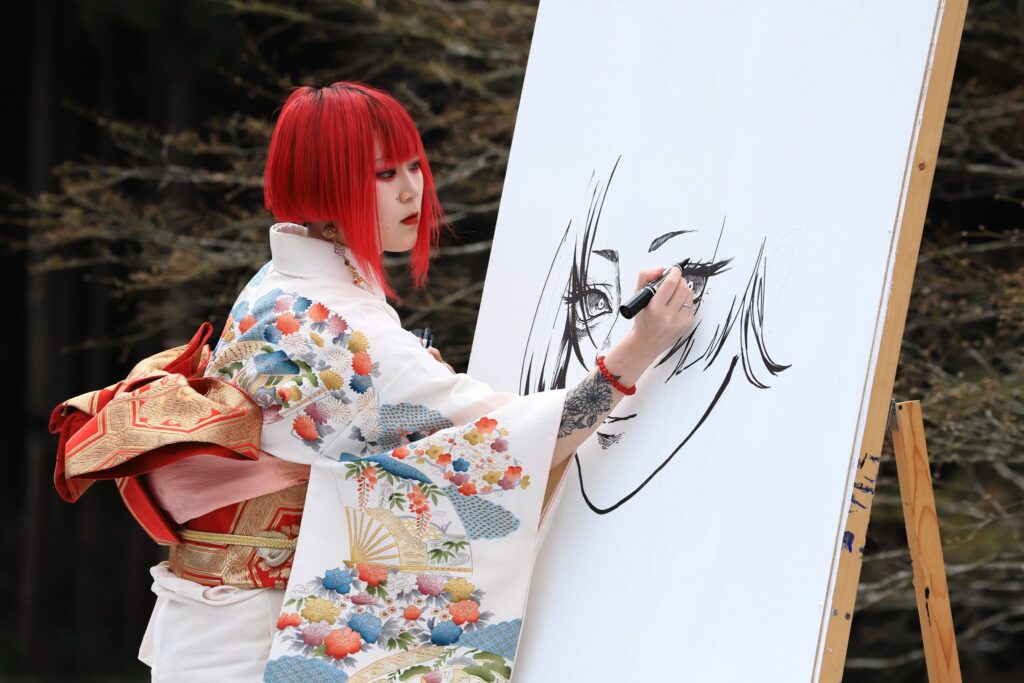
Self-taught from the age of 14, he has toured Tokyo, Osaka, Nagoya and beyond as a live painter.
In 2023 he created the key visual for the Phantom Capital Festival held at Ichijodani. He now works across Japan on a wide range of projects.
In 2023, after 450 years, Koshosho descended onto the Yume Butai stage in the reconstructed townscape. Said to have been the principal wife of Asakura Yoshikage, fifth head of the Asakura clan, she was drawn onto a blank canvas from feeling alone.
M
Illustrator (second series)
Marie Sugishi
Illustrated the second series of yokai, drawn from museum exhibits, Ichijodani landmarks and Fukui specialities.
H
Illustrator (second series)
Haribuki Shikimi
Illustrated the second series of yokai, drawn from museum exhibits, Ichijodani landmarks and Fukui specialities.
♦
Characters
요괴 도감
Characters born out of the artefacts, legends and history of Ichijodani. Alongside our own 21 yokai, the compendium gathers the 16 winning entries from our nationwide open call — 37 in all.
No.001
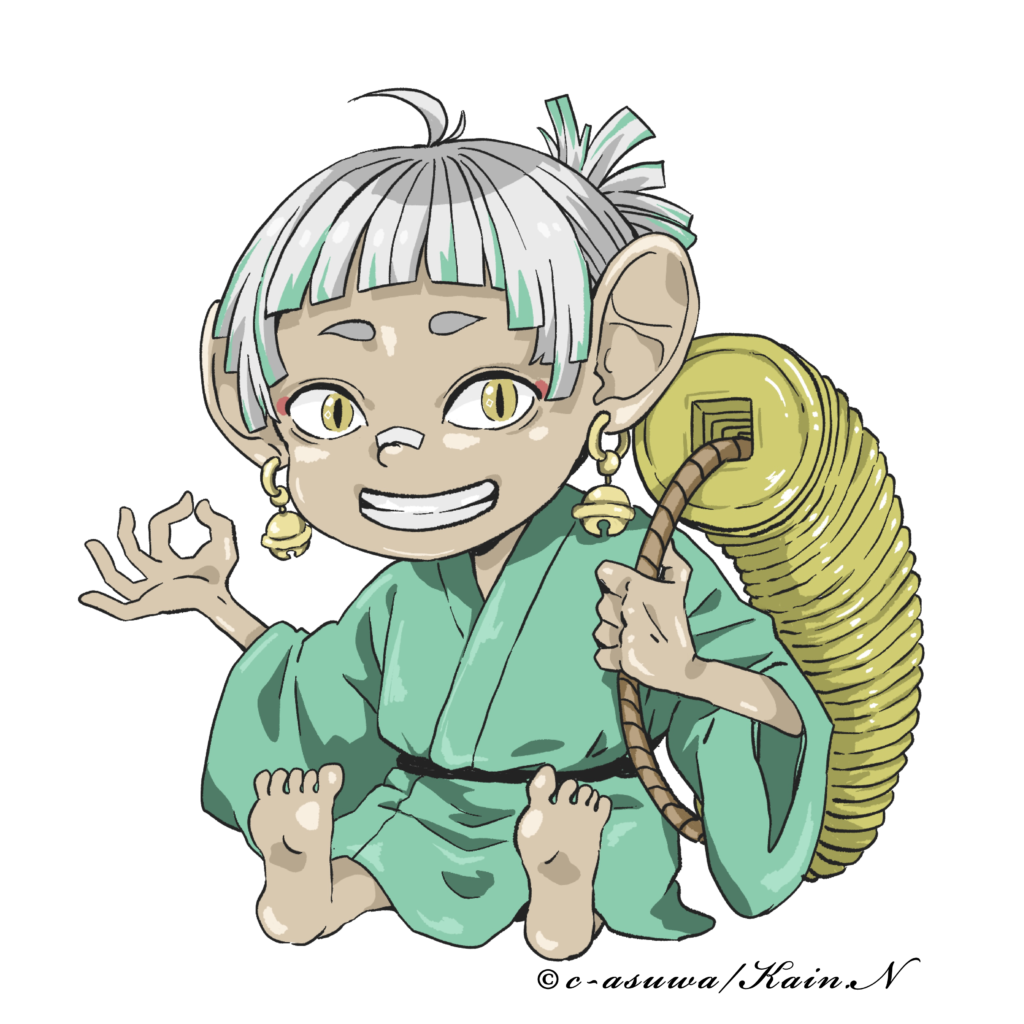
Hesokuri
the hidden nest-egg
illust. 니시노 카인
SizeAbout 120 cm
PersonalityLoves mischief
LooksBig ears
Favourite foodPersimmons
The only yokai who knows where the fabled Asakura treasure lies. Its ears are huge and keenly tuned to sound: whenever someone comes to steal the buried gold, those ears twitch and the bells on them ring.
Anyone who tries is dealt with. It guards the villagers' savings from wrongdoers, and quietly turns the money of the very rich, and of the wicked, into money of its own.
It hides its nest-eggs where nobody would think to look: down wells, under floorboards. It calls itself "oira."
No.002
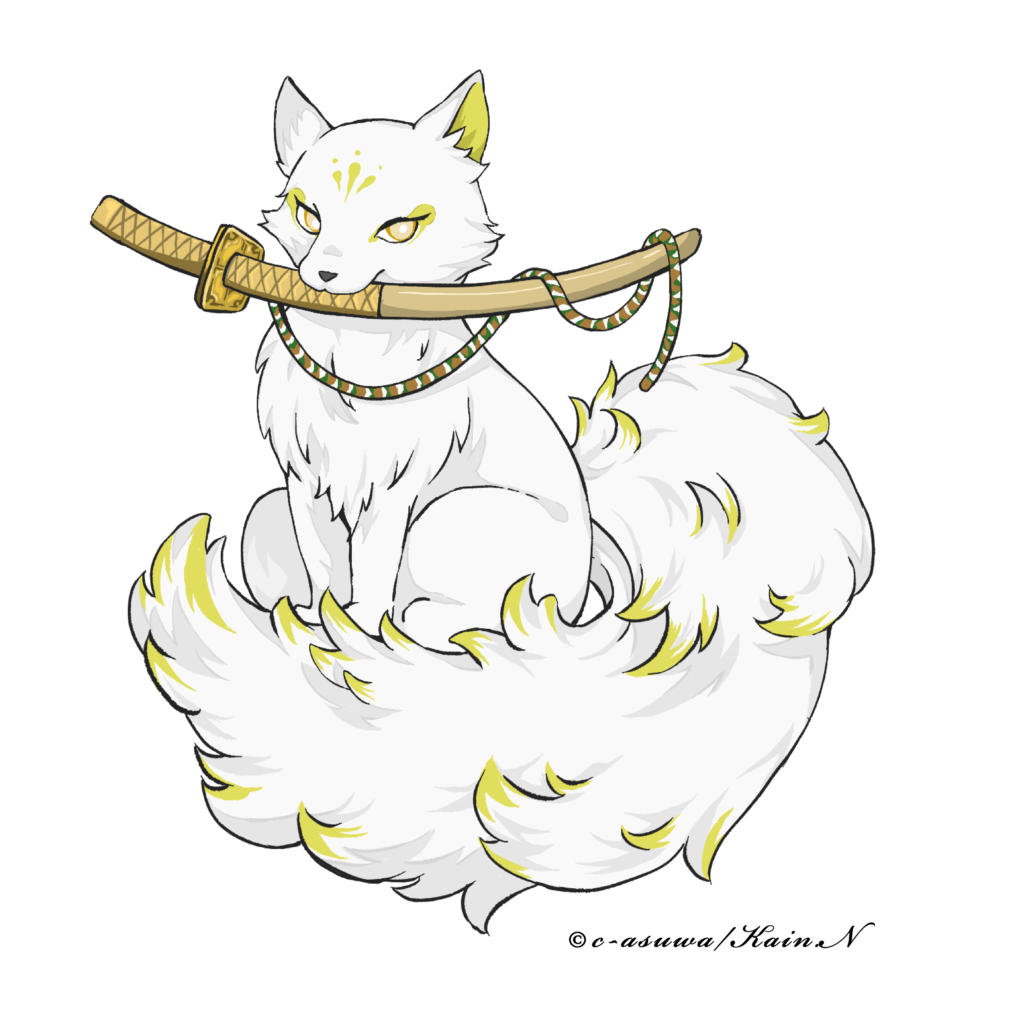
Kingitsune, Messenger of the Gods
the golden fox
illust. 니시노 카인
SizeAbout the size of a fox, with a two-metre tail
PersonalityGentle and softly spoken
LooksA great tail; carries the sword Kogitsunemaru in its mouth
Favourite foodRice
A messenger of Inari Myojin. As a god of agriculture, it loves rice above all. Among the yokai it apparently goes by "Gon-chan."
It guards a sword with supernatural power and bestows that blade upon a saviour. It is also the one the other yokai come to for advice when they visit Abaka Kasuga Shrine.
No.003
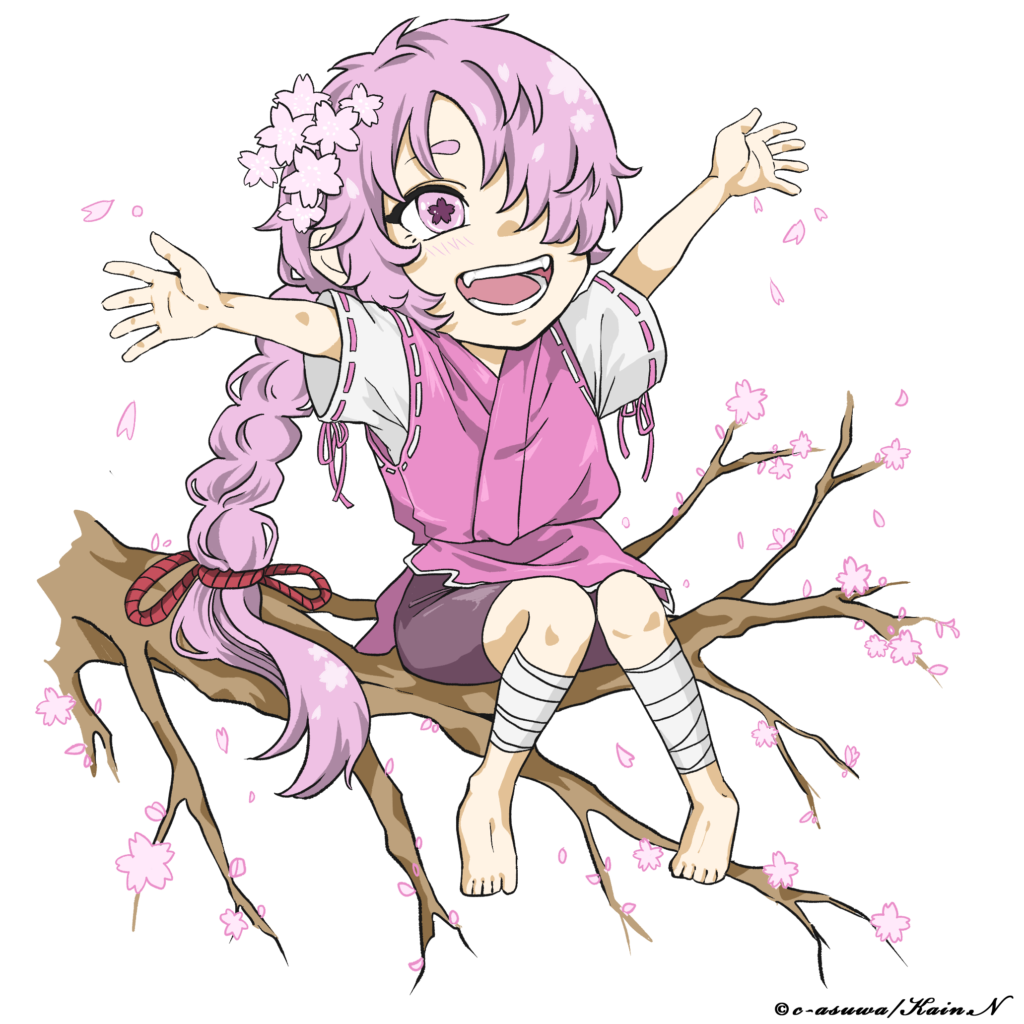
Hanamaru
the cherry-blossom child
illust. 니시노 카인
SizeAbout the size of a primary-school child
PersonalityPrefers dumplings to blossom
LooksCherry-pink hair
Favourite foodDango dumplings
A yokai that emerges when the cherries flower. It adores scattering blossom storms, and leaves the villagers despairing over the sheer volume of petals to sweep up. Dumplings over flowers, every time — it has been known to help itself to people's snacks.
When Asakura Yoshikage and Ashikaga Yoshiaki held a poetry gathering, it brought the weeping cherries into full bloom and made the occasion. It cannot bear the cold and hibernates through winter.
Anyone who meets it outside spring is said to be blessed with good fortune.
No.004
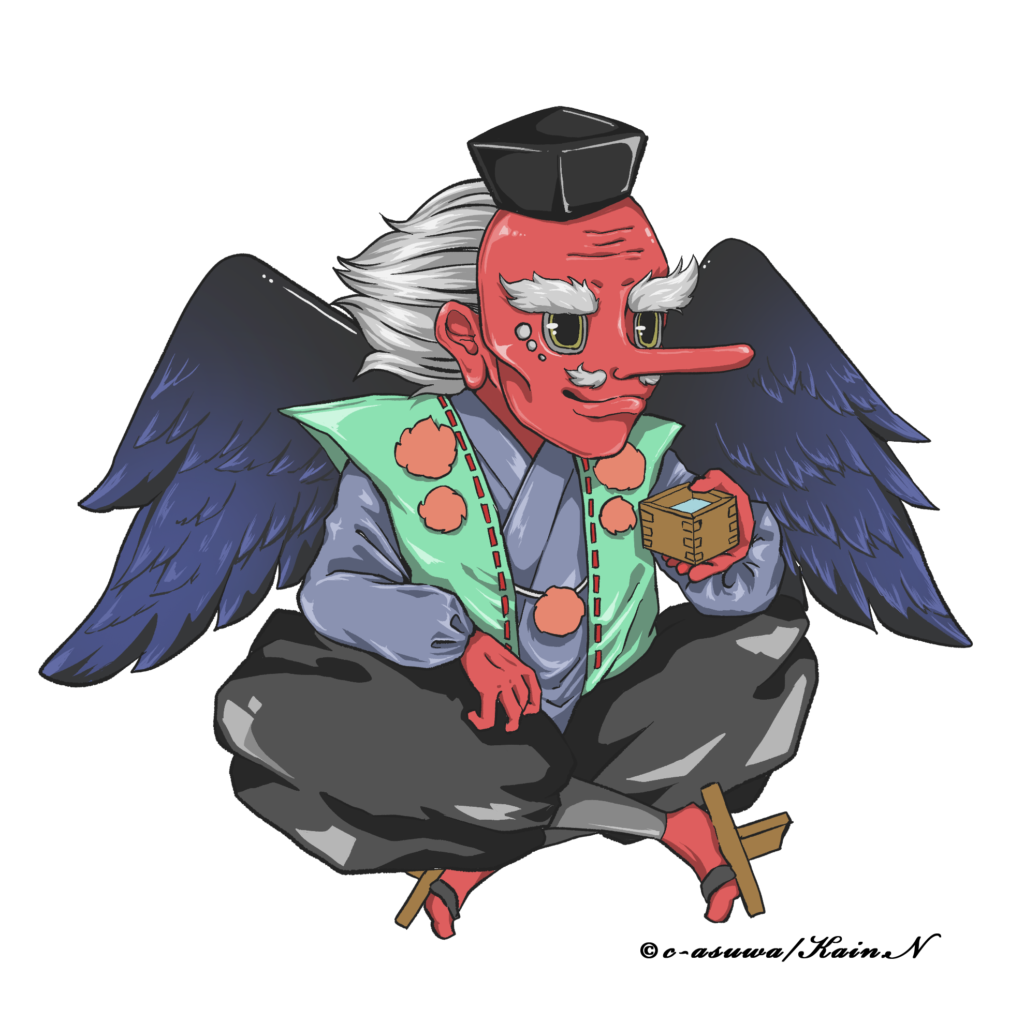
Asakura Tengu
the long-nosed mountain goblin
illust. 니시노 카인
SizeLarger than a grown adult
PersonalityFond of a drink
LooksA very long nose
Favourite foodRanja sake
Its stronghold sits atop a great tree at the mountain castle of Ichijodani. It flies where it pleases and sees to the heart of things with far-reaching sight.
When enemies or danger draw near, that trademark nose twitches and it knows. It loves sake; the masu cup in its hand is always full and never empties, however much it drinks.
Past the age of 1,000 it took to drinking Ranja, the medicinal sake that originated with the Asakura clan, for its health.
No.005
Kameko
the Echizen-ware jar spirit
illust. 니시노 카인
SizeChanges freely to match any large Echizen jar
PersonalityReserved; hates being seen
LooksHer body takes on whatever colour she means to dye
Favourite foodThe sweet well water that springs up in Ichijodani
A yokai who dwells in the great Echizen jars used by the town's dyers. She moves between the jars of the castle town, producing whatever colour of dye the townspeople need.
She is said to have been born from the clear spring water of Ichijodani. Robes dyed with her liquor took colour so beautifully that in the Sengoku era they changed hands in Kyoto and elsewhere at high prices, as goods almost too rare to be real.
No.006
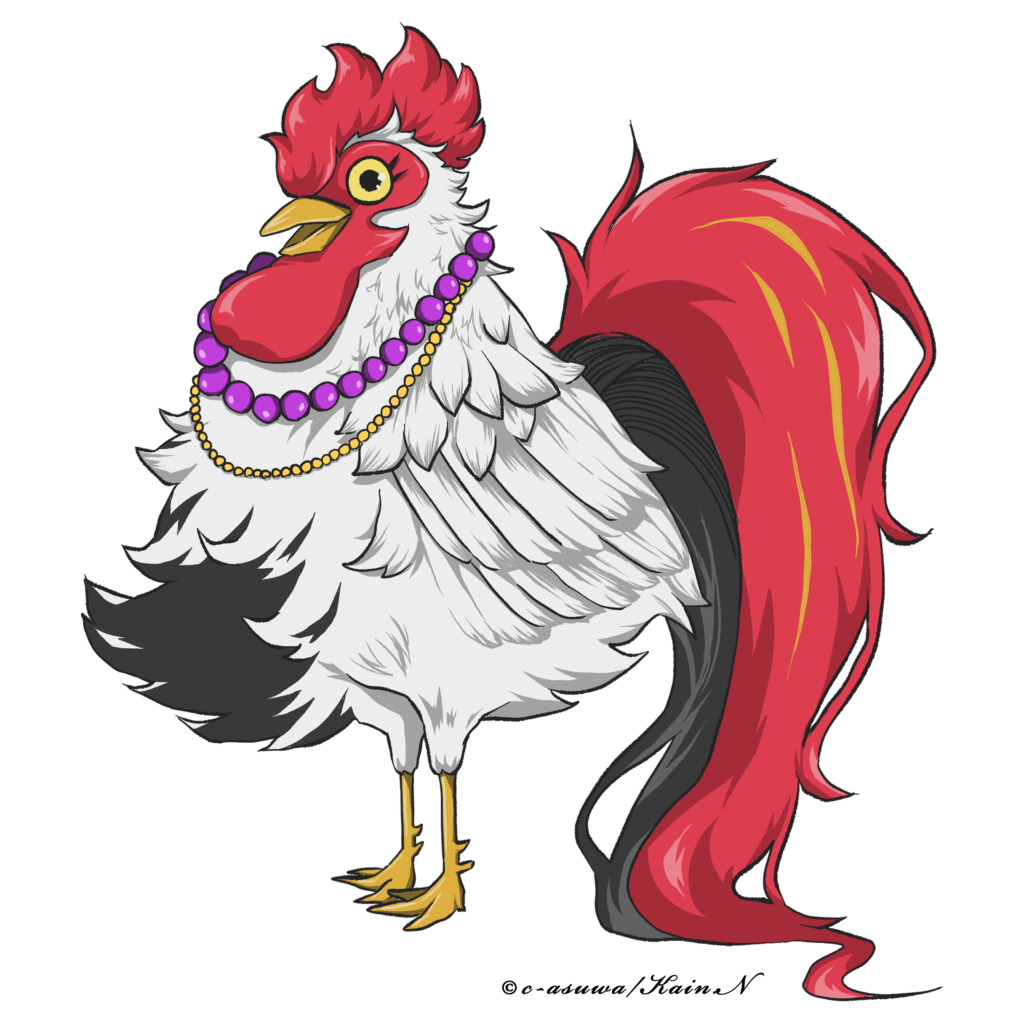
Keiomaru
the rooster king
illust. 니시노 카인
SizeAbout the size of a large peacock
PersonalityAn early riser, and impatient with it
LooksA long tail and a comb like flame
Favourite foodThe fine rice grown in Togo
Originally a rooster kept by Kobayashi Gonnokami, a retainer of Lord Yoshikage. Just before Oda Nobunaga's forces arrived, it fled Echizen by boat from Sanribahama together with Yoshikage's son, Aiomaru.
The boat drifted off the coast of Etchu and Niigata until roosters on land, answering Keiomaru's long tail, began to crow. Following those calls, the boat made landfall.
It saved Aiomaru's life. The place where they landed was named Echizenhama, and the rooster is enshrined at Torinoko Shrine.
No.007
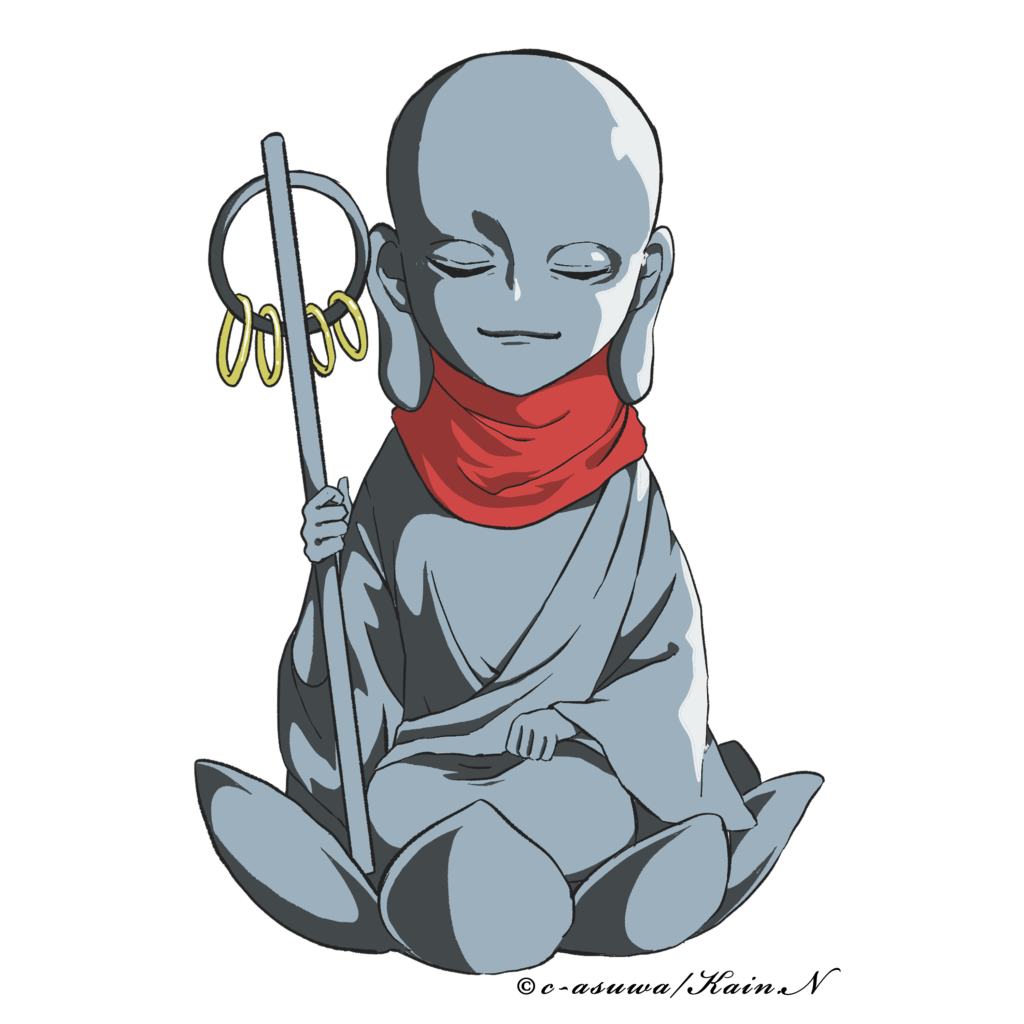
Otsuge Jizo
the Jizo who foretells
illust. 니시노 카인
SizeAbout one metre
PersonalityImmovable — nothing shakes it
LooksStubbornly straight-laced
Favourite foodOfferings from the people of the castle town
A Jizo enshrined during the Sengoku era, watching over the townspeople with a kind face. It once appeared in their dreams along with the other Jizo statues, all long exposed to the rain, asking for a roof. The people built one — and in thanks, it has been giving them important dreams ever since.
No.008
Yukimaru
the snow child
illust. 니시노 카인
SizeAbout 120 cm
PersonalityAs quiet as snow falling without a sound
LooksA hand-made snow scoop (banba) and long hair
Favourite foodMochi
The yokai who brings the snow. When Yukimaru is truly in earnest, they say, Echizen is buried. It seems to feel bad about the trouble heavy snow causes, and has been known to pitch in with the shovelling using the banba scoop it carries.
More than anything it loves to dance in the falling snow; with its hair unbound it moves like a fairy. The townspeople passed down the story of "a great blue flower blooming in the snowfall."
No.009
Hotarubi
the firefly light
illust. 니시노 카인
SizeAbout the size of a human child
PersonalitySoft and drifting
LooksGlows from within at night and dances through the air
Favourite foodThe clear spring water of Ichijodani
Since ancient times it has appeared around Ichijodani on June and July nights. Sometimes it moves in a swarm ringed by fireflies; sometimes it draws pictures in light across the night sky, trying to tell us something.
The fireflies wheeling around it are the given form of countless nameless soldiers who fell in the wars. Hotarubi leads those souls, wishing that the same mistakes are never made again, and each year in this season it takes to the air to carry that wish to us.
No.010
Kamekichi
the moat turtles
illust. 니시노 카인
SizeBetween 10 and 60 cm
PersonalityUnflappable
LooksThere are several, and each one is different
Estimated age10,000 years
Each of the five Asakura lords had a Kamekichi of his own; they are reckoned to be some 10,000 years old. They live in the ponds still, and are said to live too in the castle town believed to lie underground.
They watched over the lords around the residence, and played their part at the crucial moment — leading Yoshikage's son Aiomaru along a hidden path as danger closed in.
No.1000
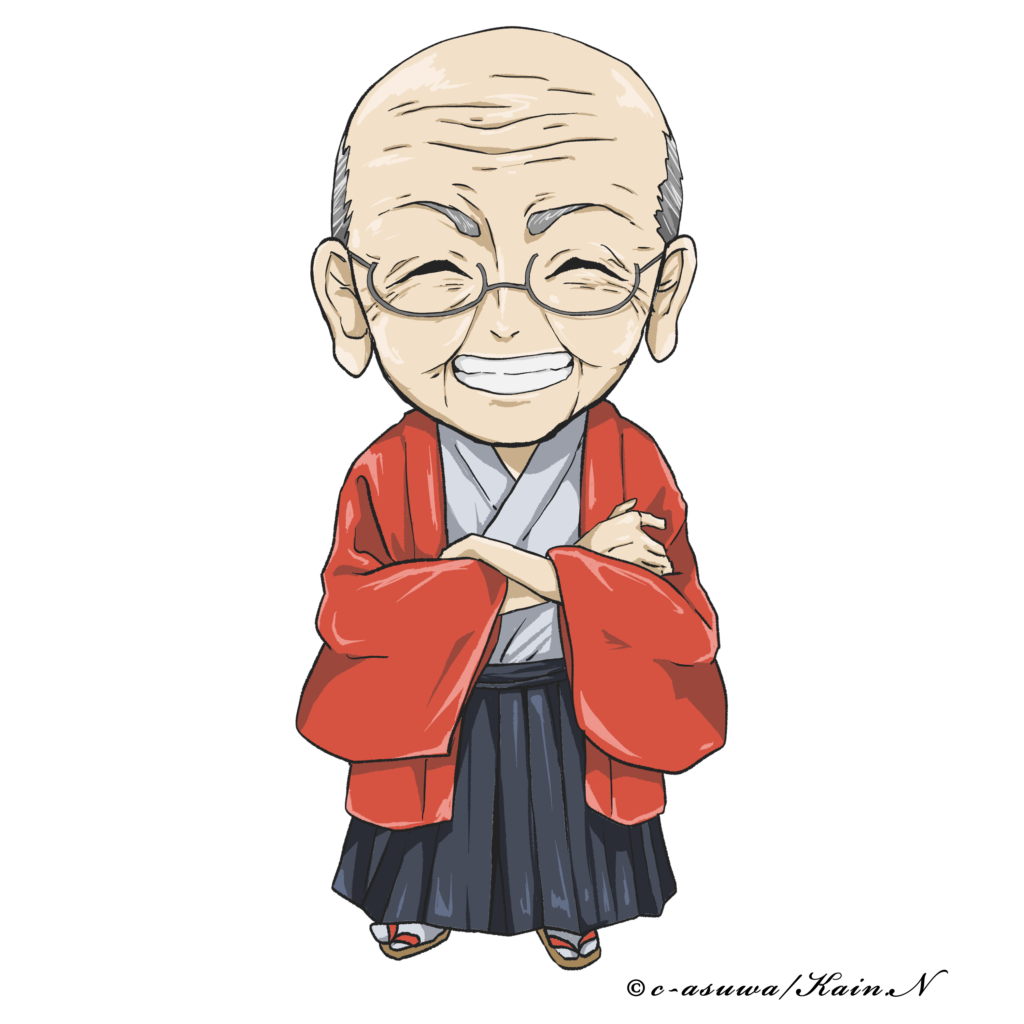
The Mysterious Elder
illust. 니시노 카인
AgeUnknown (1,000 years, perhaps?)
PersonalityMild-mannered and learned
LooksSpectacles
Favourite foodLocal Ichijodani sake
A rare and deeply learned presence who has known everything about Ichijodani from the Sengoku era to the present day. The townspeople have called him Chairman since ancient times, and he goes on offering them advice and wisdom.
In the Sengoku era he would share cups of sake with Lord Asakura Yoshikage and talk of their dreams. Much about him is unknown; he is said to visit, now and then, the Ichijodani castle town that still lies quietly underground.
No.011
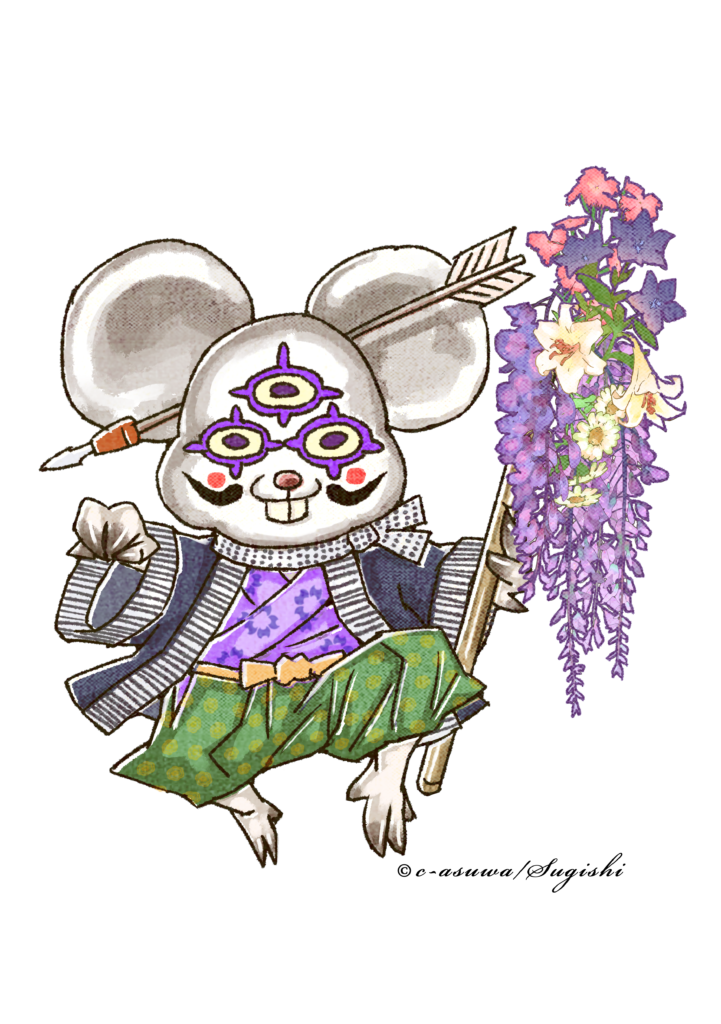
Ya-nezumi
the arrow mouse
SizeAbout the size of a mouse
PersonalityTurns into a boar on 5 May
FeatureIts eyes form the Asakura mitsumori-mokko crest
A runaway boar that tore up the fields and plagued the people until the lord of the Asakura put a stop to it and turned it into a mouse. It was supposed to have mended its ways, but the mischief never left: spot a child up past bedtime and it will talk them into slipping out to play.
Once a year, on 5 May, it reverts to a boar, and the whole castle town has to turn out to hold it down.
"Is it true you can hear something at Eirinzuka? Let's go and listen!"
No.012
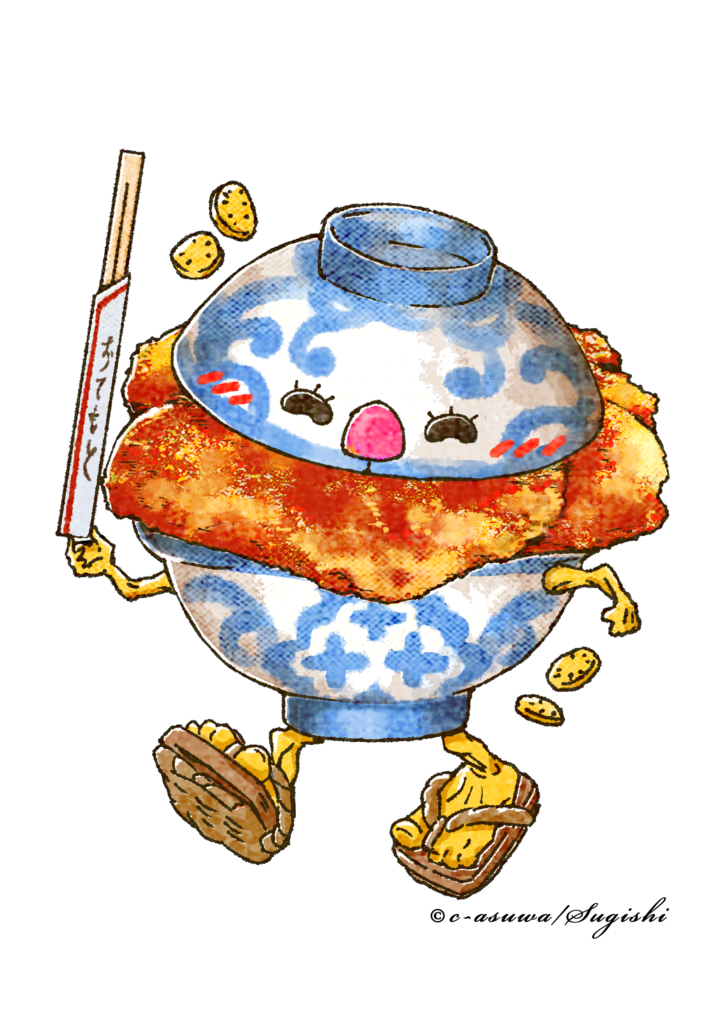
Yuki-geta-don
the snow clog
SizeAbout one bowl of sauce katsudon
Favourite seasonWinter
A snow clog, reborn in the present day and rather more delicious than before. Like snow packed underfoot, its cutlet is made from fine, smooth, springy meat — and it is superb.
Its selling points are its flatness and its cheerful lack of concern. Now and then, like the sauce itself, it shows a sweet and spicy side.
Its catchphrase: "So-ssu ka?"
No.013
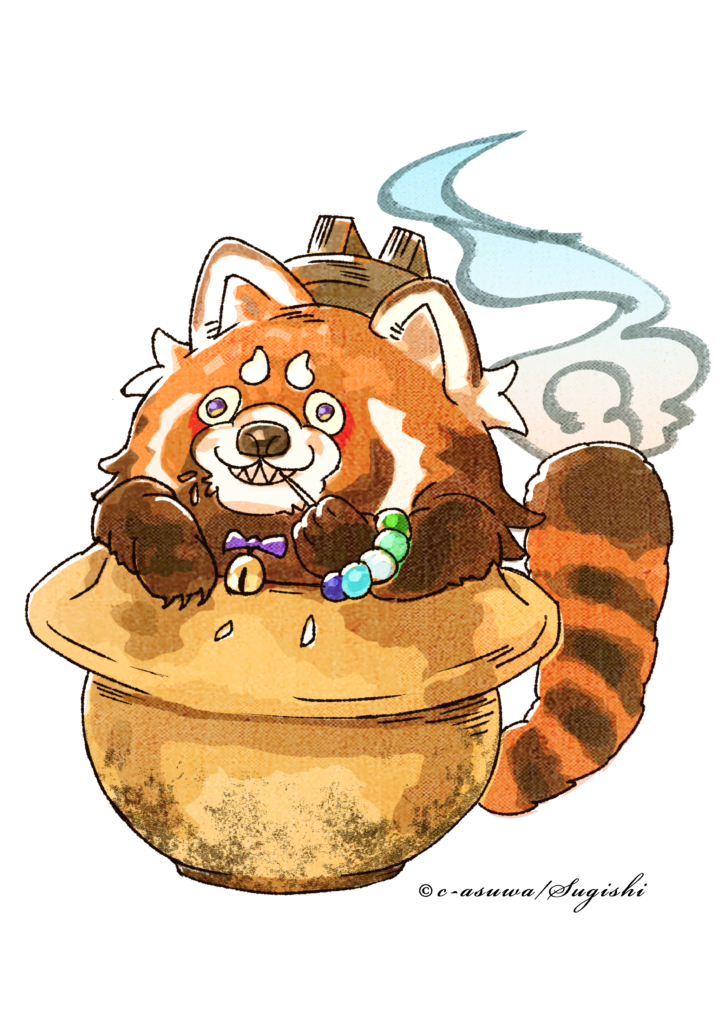
Bunbuku Hagama
the red panda in the rice pot
SizeSmall enough to fit in a hagama pot
LooksA great tail
Favourite foodIchihomare, Fukui's premium rice
DislikesLeaving food on the plate
A greedy red panda that has possessed a hagama rice pot. So absorbed was it in scavenging the scraps around the kitchen that it fused with the pot without noticing.
Which is why any leftovers send it into a blazing fury, and why it grieves over an age of too much food. It has nothing to do with the crew over at Nishiyama Park, though it considers itself the senior party.
"There are seven gods in a single grain of rice! Leave three and that's twenty-eight! You'll be punished for it!"
No.014
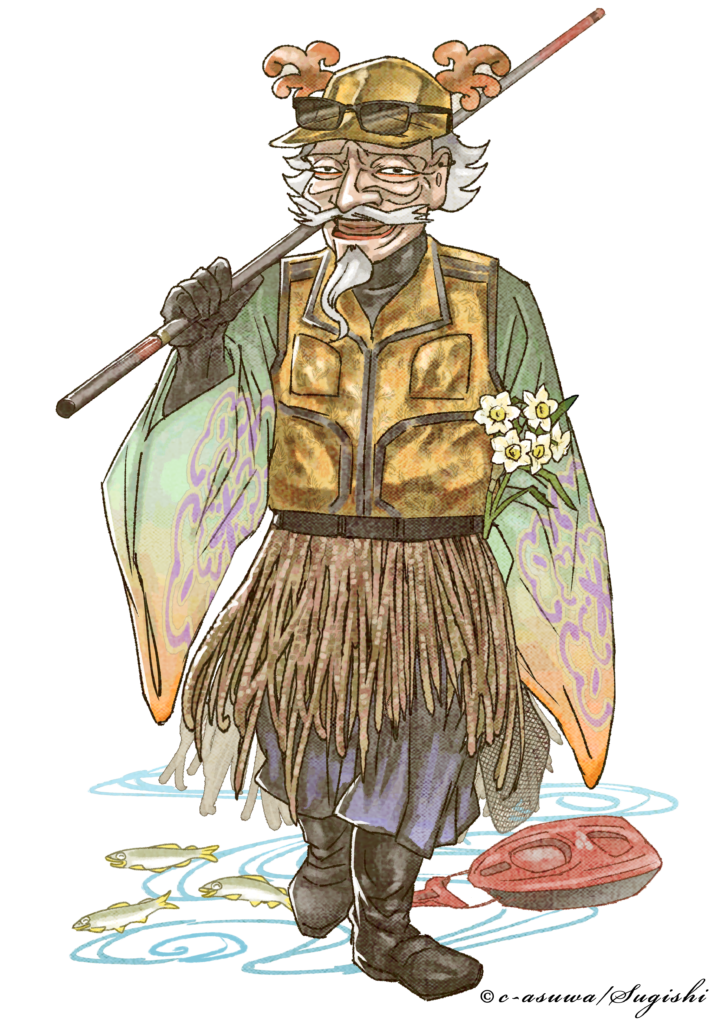
Ayu-tsuri Jiisan
the old sweetfish angler
SizeAbout the size of a grown adult
Favourite flowerEchizen daffodil
Favourite Noh playGenji Kuyo
Usually foundThe Asuwa River
A masked yokai said to appear on the Asuwa River during the sweetfish season. Placid as a rule, it shows no mercy to those with bad manners or a poacher's habits. Catch its eye and your boots may turn to stone, or the lid of your flask simply cease to exist.
Rumour is divided on the face beneath the mask: a terrible demon, or a rather handsome old gentleman.
"That's your punishment for bad manners — sit still for three days and three nights."
No.015
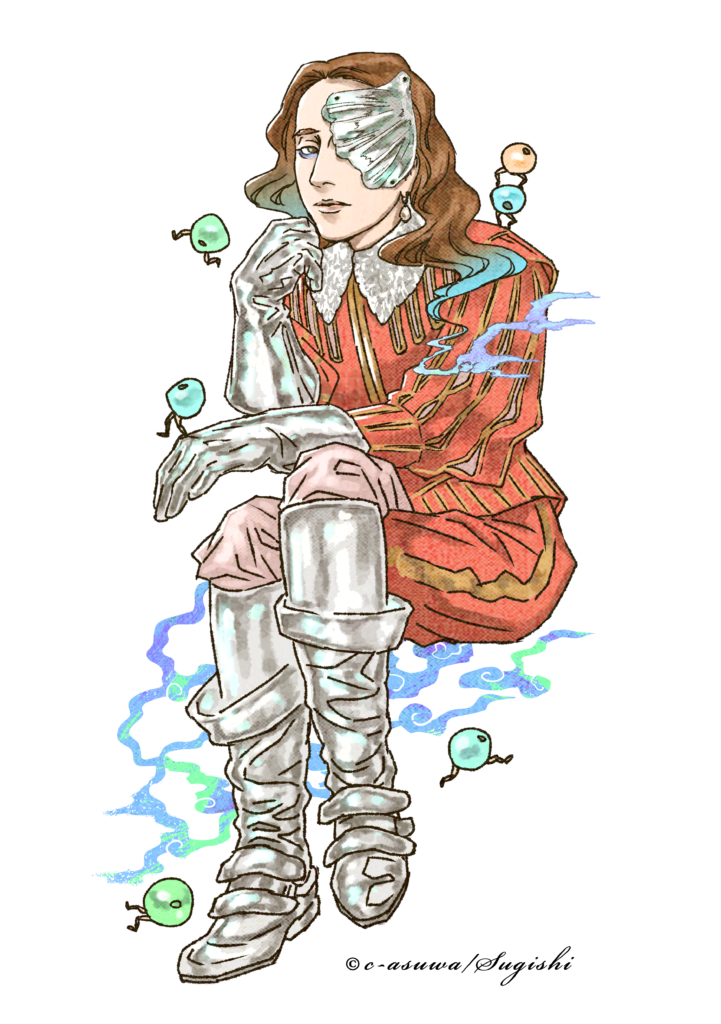
The Phantom at the Bottom of the Well
거주지Venice, Italy
Often appearsThe well at the Asakura Residence
HobbyDrinking wine from a goblet
A mysterious, handsome foreigner who sits by the well night after night, sighing. He wears a mask of broken glass, and is apparently searching for the shard-siblings he was parted from.
Lonely, disarmingly needy and undeniably good-looking, he is forever chatting someone up. Take care: those he particularly likes get taken down to the bottom of the well.
"I'd love to play a little catch with your heart." (Inspired by a Venetian glass goblet.)
No.016
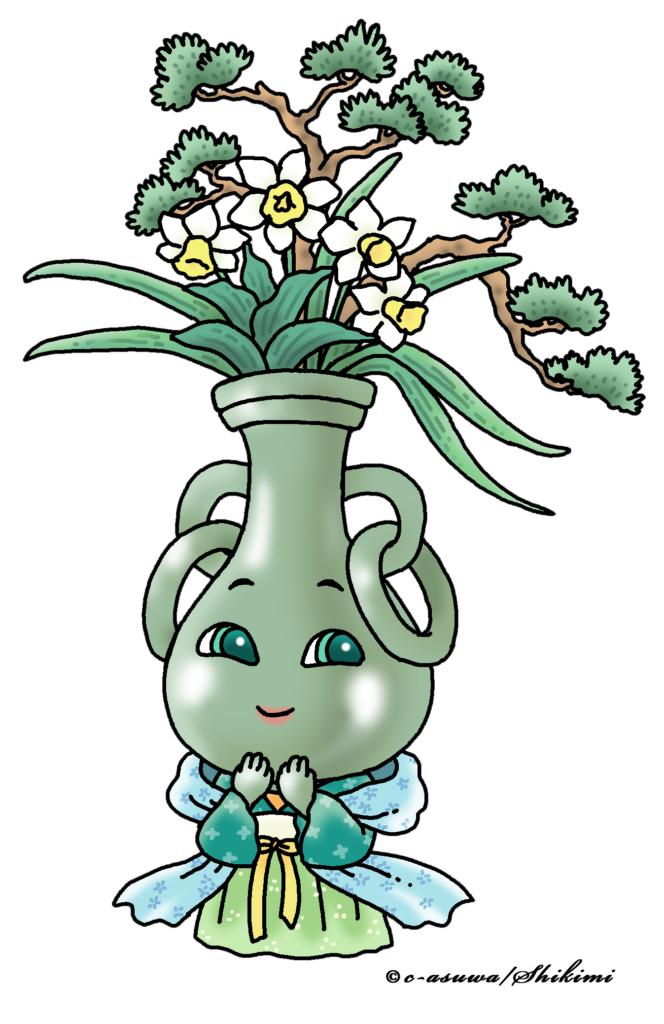
Itchora-ikko
the child in its Sunday best
Favourite flowersEchizen daffodil, pine, and omoto
거주지China
Itchorai is Fukui dialect for one's very best. This one is convinced it is the finest vase in all Ichijodani. It turns up in the tokonoma alcove before anyone notices, and vanishes the moment flowers are arranged in it.
Arrange nothing and it will steal every flower in the garden — hence its nickname, Hana-nussutto, the flower thief. Rather proud and rather wilful, it sees no wrong in taking flowers at all.
No.017
Bandokon
the Shakudani stone brazier
거주지Mount Asuwa in Fukui
Made ofShakudani stone (green tuff)
Mainly used forKeeping warm in winter
It warms anyone and everyone without distinction. In winter the townspeople are delighted to see it; in summer it is an absolute nuisance. Anger it and it will throw the charcoal from inside itself at you.
It hails from Mount Asuwa. Wet it and it turns a beautiful deep green — though it hates the water.
No.018
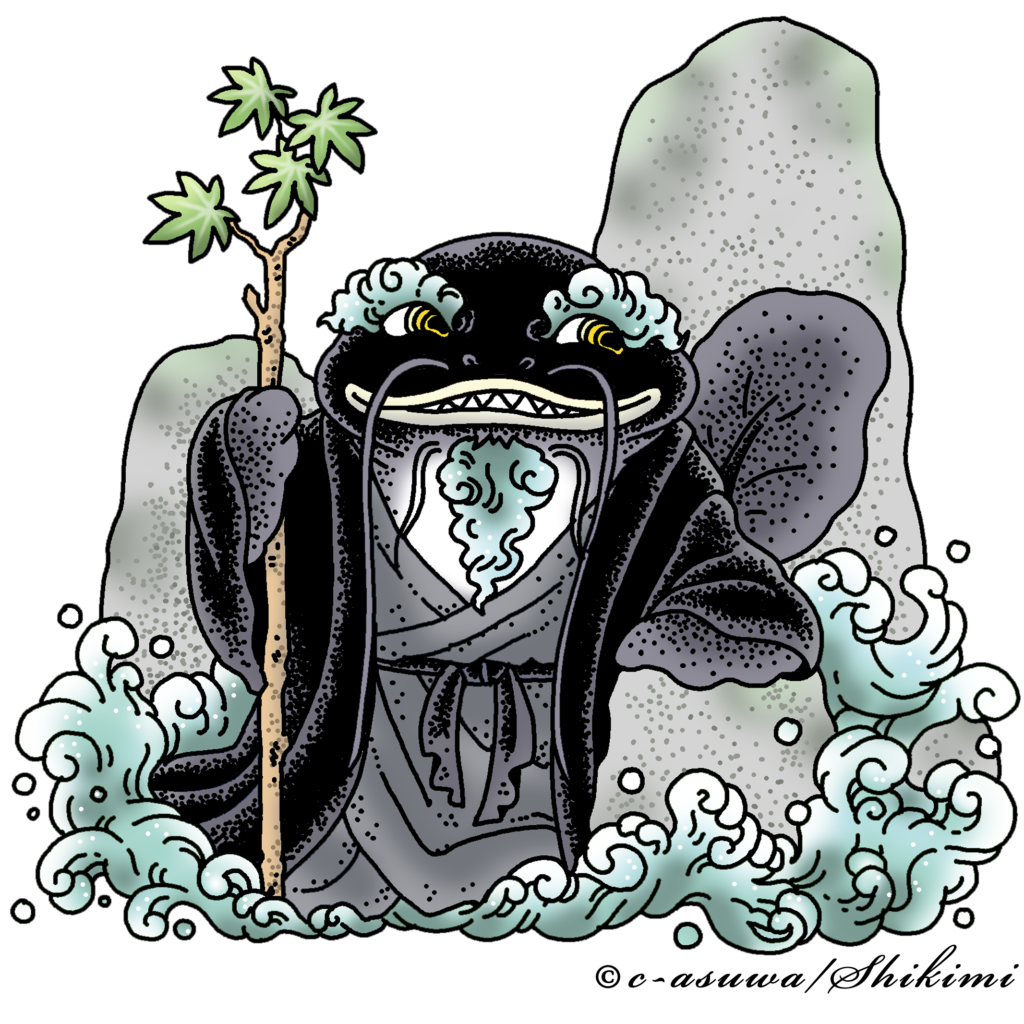
The Great Catfish of the Suwa Residence
Usually foundThe Suwa Residence
LikesThe clear river water running down from Mount Ichijo
Solid and imperturbable, with a playful streak underneath. It can summon water at will; when it is away, they say, the garden's water runs dry. It is perpetually wet, and leaves a trail of water wherever it passes.
In one hand it carries a Japanese maple branch, which it uses as a walking stick.
No.019
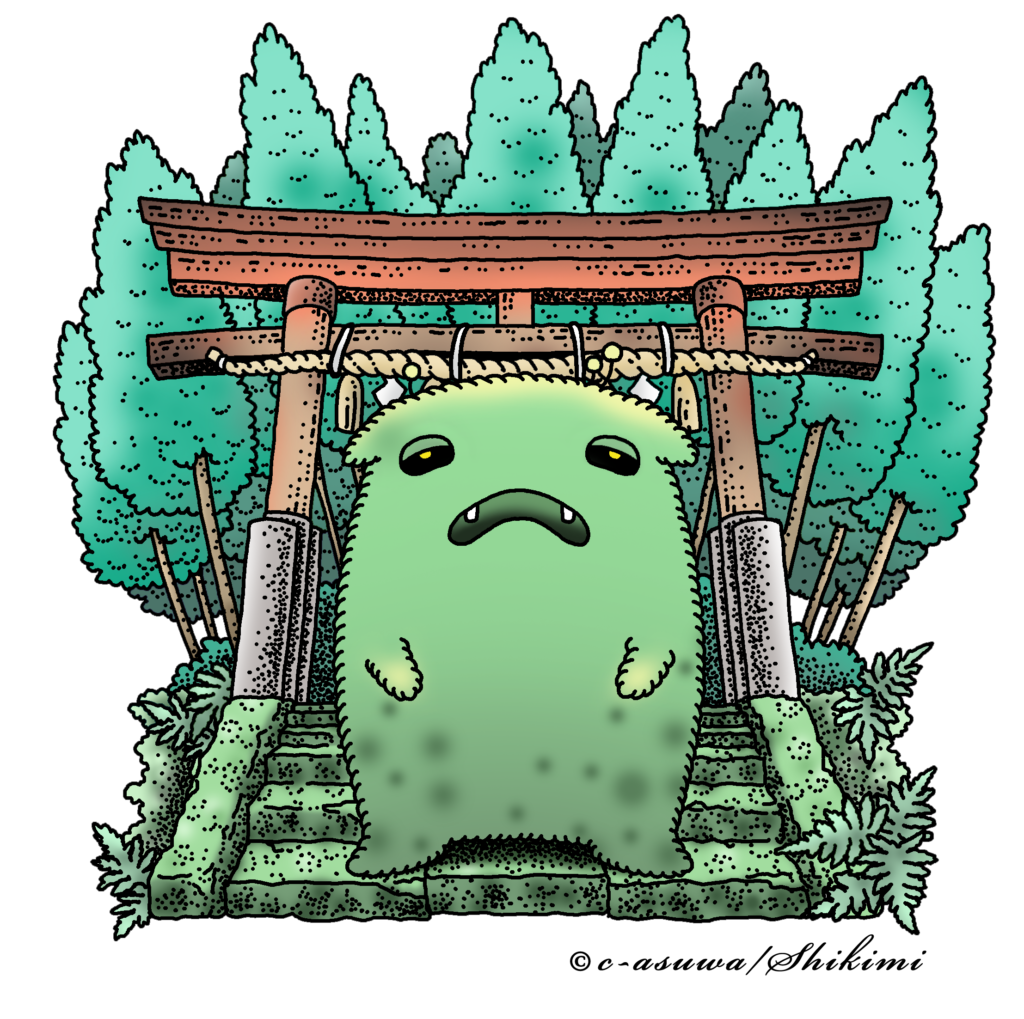
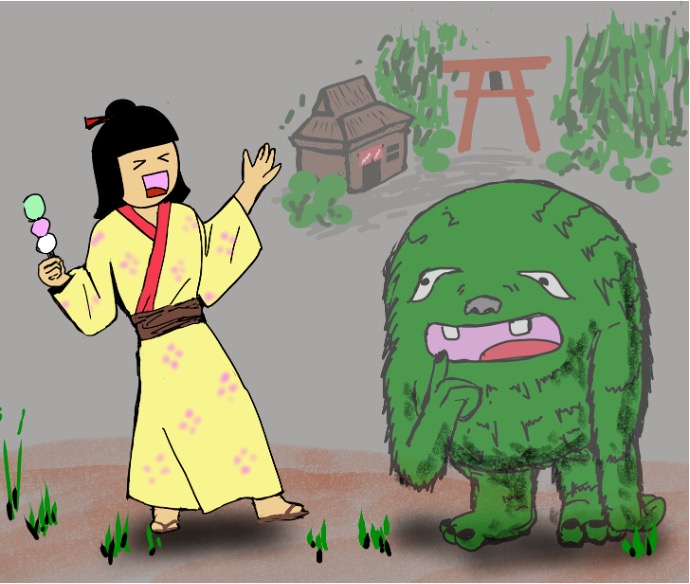
Mokomoko Ishina
the mossy stone
Usually foundAbaka Kasuga Shrine
Catchphrase\"Ura\" (Fukui dialect for \"me\")
Close friendKingitsune
"Ura" — Fukui dialect for "me" — is its catchphrase, drawn out into a long "ura-a." Wrapped in moss, it is wonderfully soft to the touch. It likes damp places and lives at Abaka Kasuga Shrine. It and Kingitsune are said to be great friends.
Rumour has it a stone Buddha of Shakudani stone is enshrined inside. Nobody knows for certain. You would have to reach right in to touch the stone — and unless the yokai itself allows it, the soft moss bounces your hand straight back. That moss is growing, little by little.
No.020
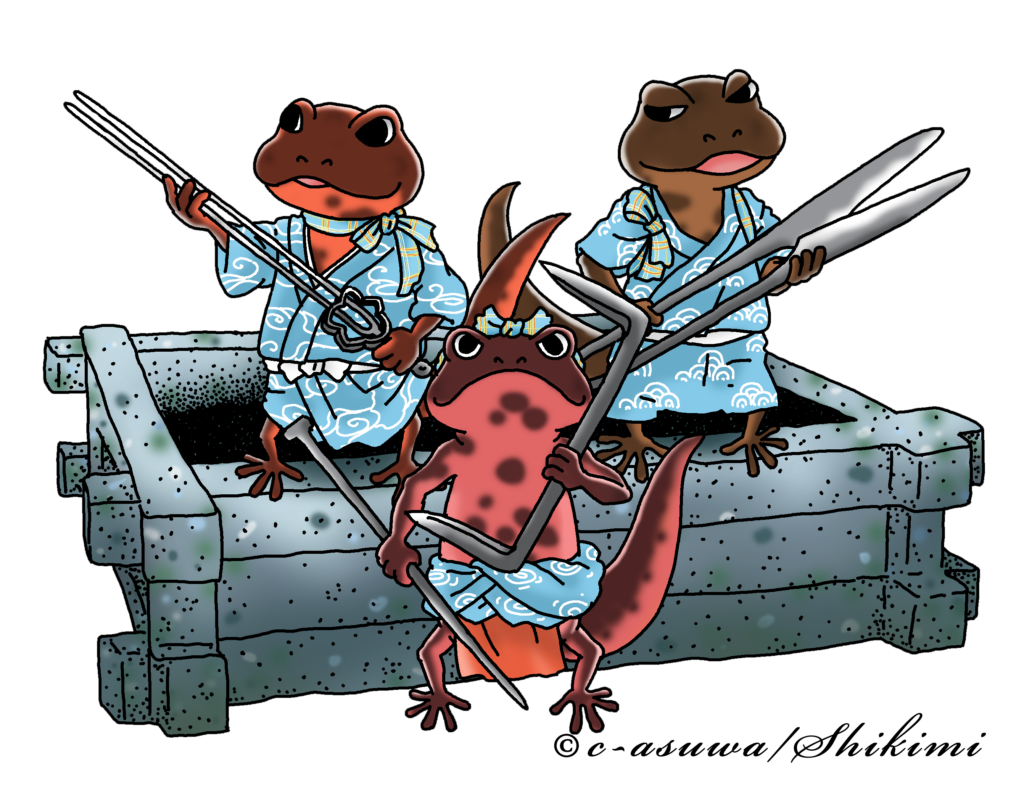
The Three Newt Brothers
Usually foundThe well at the Asakura Residence
Close friendThe Phantom at the Bottom of the Well
Newt yokai who guard the wells: the Imori clan, watching over wells all over the town. Their weapons are whatever has fallen down a well, or whatever they have borrowed from the residents.
The one in the middle is the eldest (chachatto — Fukui dialect for "get on with it"), and a little impatient. The newt on the right with the scissors is the second brother (onbori — "easy-going"), who takes every day slowly. The one on the left with the hairpin is the youngest (koppena — "cheeky").
Rumour has it they passed a shard of glass they found in a well to the Phantom at the Bottom of the Well.
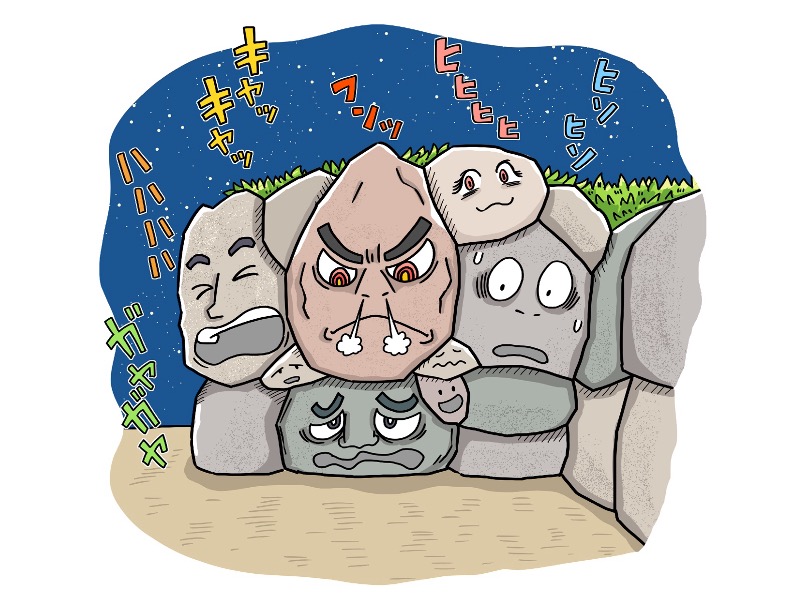
GRAND PRIZE
Iwanari-sama
Naoto Abe
수상GRAND PRIZE
응모자Naoto Abe
거주지Tagajo, Miyagi
A yokai in the shape of a stone wall made of face-bearing rocks.
By day it is just stone; at night the faces emerge and begin to talk.
It enjoys startling passing travellers - but it will also quietly call out to help someone who has lost their way. At heart it is kind.
WINNER
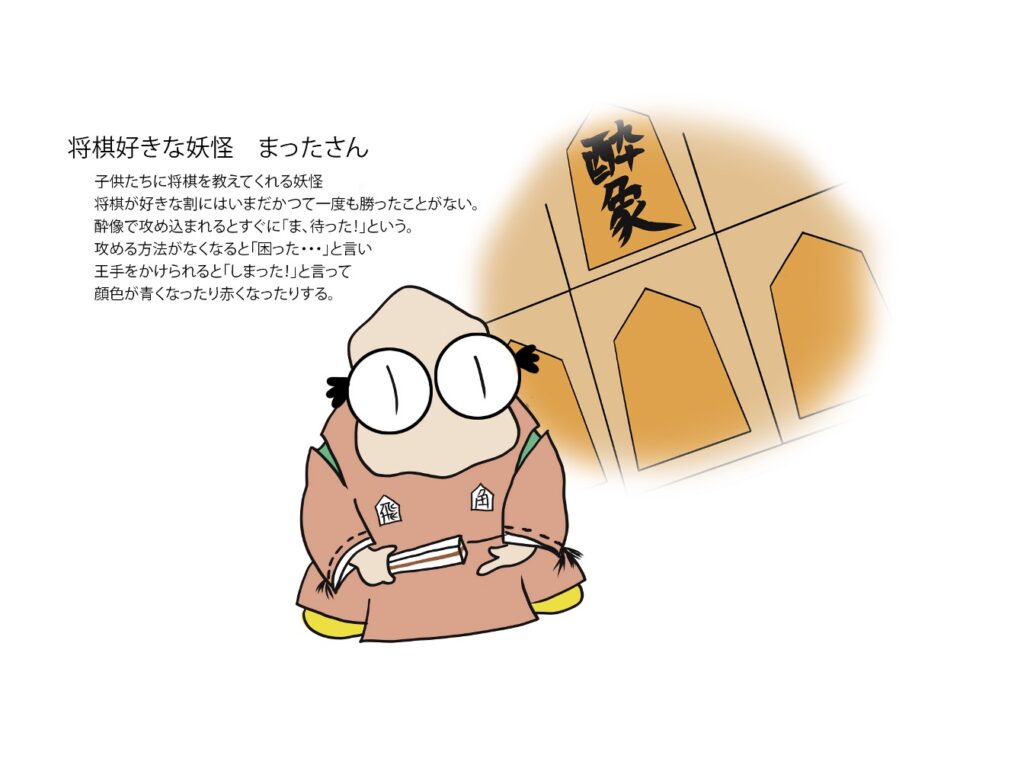
Matta-san, the shogi-loving yokai
Koichi Matsuda
수상WINNER
응모자Koichi Matsuda
거주지Fukui City, Fukui
A yokai who teaches children shogi.
For all its love of the game, it has never once won.
Attacked with the drunken elephant, it immediately cries "Wa- wait!"
When it runs out of moves it says "Oh dear..."
and when it is put in check it says "Oh no!" and turns first pale, then red.
WINNER
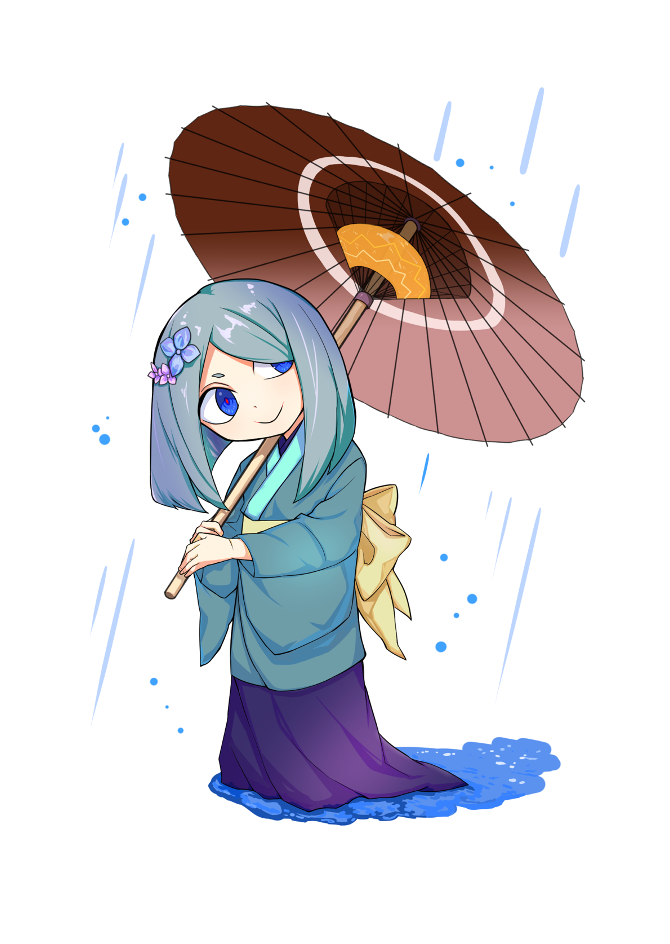
Kasa-onago, the umbrella girl
Haruka Uno
수상WINNER
응모자Haruka Uno
거주지Fukui City, Fukui
SizeAbout 100 cm
PersonalityBold and innocent
FeaturesA wagasa umbrella
Large blue eyes
A hydrangea hair ornament
Favourite foodWarabimochi
A yokai in the form of a little girl, who calls out "Come under my umbrella" to people sheltering from the rain in the castle town.
She appears in the rainy season, when the hydrangeas bloom in Ichijodani.
Refuse her umbrella and water-related misfortune follows: you step in a puddle, the ceiling starts to leak. Accept, and she will see you home.
WINNER
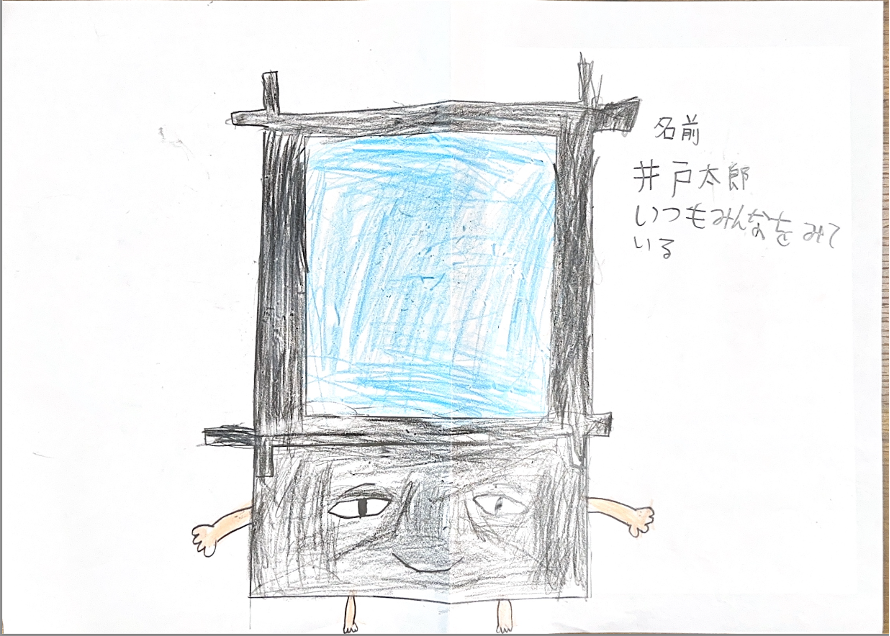
Ido-taro
Haruki Hosoda
수상WINNER
응모자Haruki Hosoda
거주지Year 5, Ichijo Primary School, Fukui City
The yokai of the wells at the Asakura ruins.
When it rains, it shelters living things from the rain.
The villagers were grateful, and a spirit formed out of that gratitude.
It is always watching over everyone.
WINNER
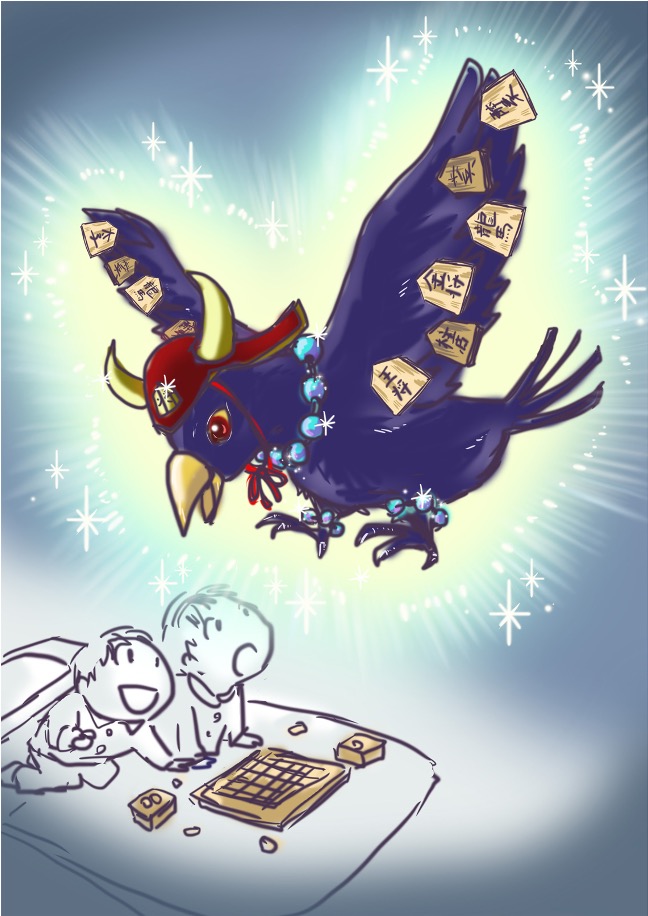
Shogi-garasu, the shogi crow
Mizue Ito
수상WINNER
응모자Mizue Ito
거주지Inagi, Tokyo
A crow yokai that came and went from the residence of the Asakura lord.
It lived in the Eiroku era, when shogi was played with the "Asakura koma" pieces.
Long ago, watching the samurai play shogi from the eaves, it longed to play itself - and so it became a yokai.
Today it slips through the dark to the homes of children who stay up late, teaching them shogi and challenging them to a game. It favours shogi played with the drunken elephant, uncommon in the modern game, and spreads the word among the children.
It cannot resist anything that glitters, and wears its favourite glass beads about its body.
It is a formidable player and shows no mercy, child or not. To any child who gives it a good game, it presents one of the glass beads it wears.
WINNER
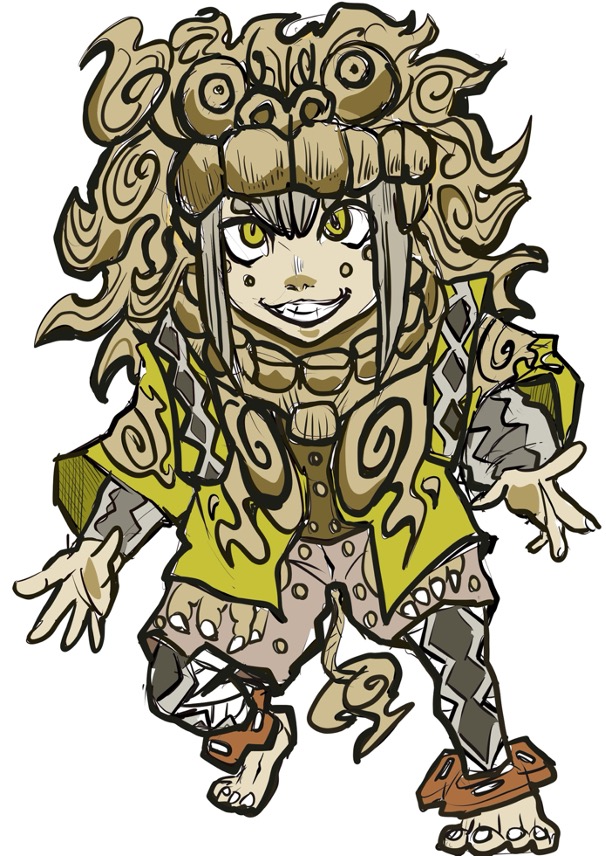
Menuki no Shishiwaka
Tsukasa Miyamura
수상WINNER
응모자Tsukasa Miyamura
거주지Wakayama City, Wakayama
A lively, mischievous yokai.
Adores wagashi.
A yokai that ran through the Sengoku era; nothing pleases it more than settling into a sword.
It travelled with its owner, and has wandered alone since their death.
It seems to have companions, but they have been scattered.
Endlessly curious, it is always running about.
It can change size freely, up to about 130 cm, and has the form of a boy.
HONOURABLE MENTION
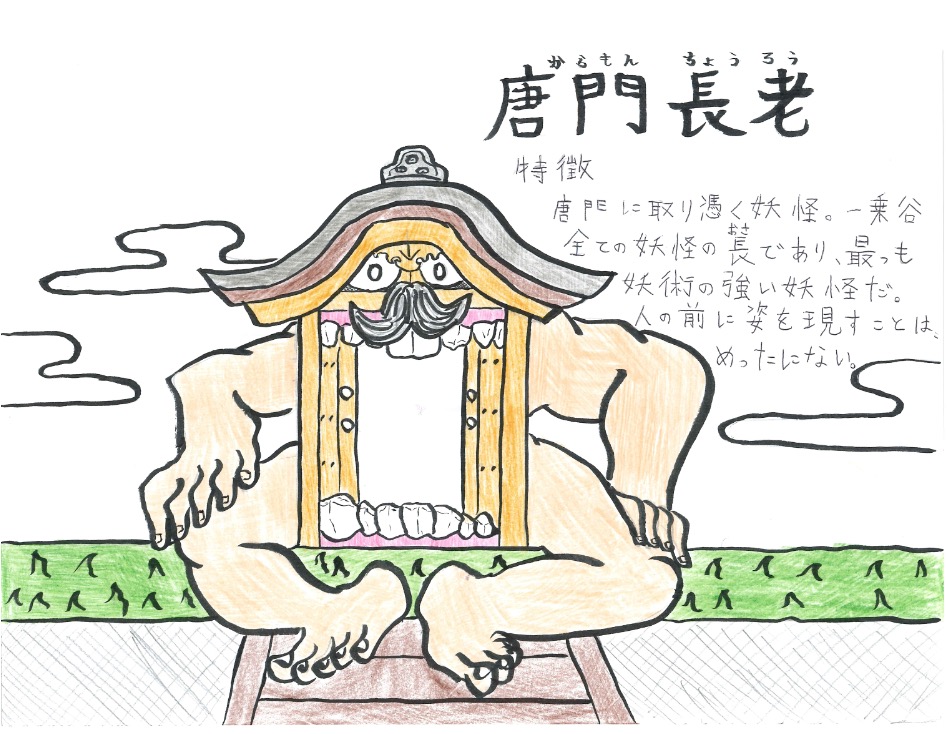
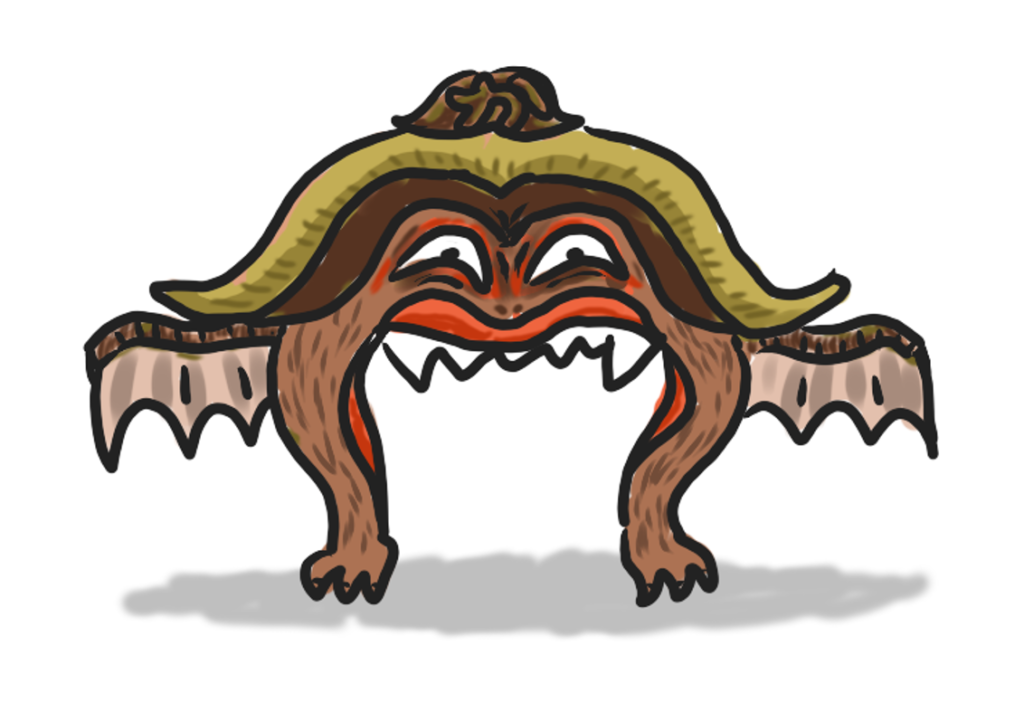
Karamon Choro, the Karamon elder
Kanato Takekoshi
수상HONOURABLE MENTION
응모자Kanato Takekoshi
거주지Year 2, Meido Junior High School, Fukui City
A yokai that has possessed the Karamon gate. It is the head of all Ichijodani and the strongest in sorcery of any yokai.
It rarely shows itself to people.
HONOURABLE MENTION
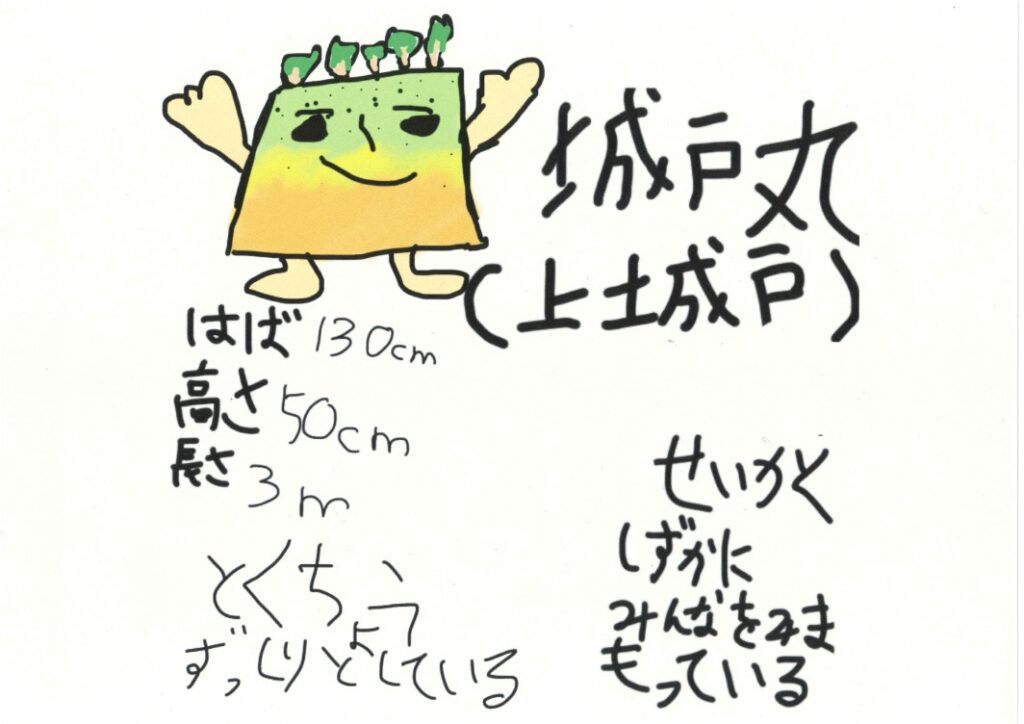
Kidomaru
Atsuto Kobayashi
수상HONOURABLE MENTION
응모자Atsuto Kobayashi
거주지Year 6, Ichijo Primary School, Fukui City
Width130 cm
Height50 cm
Length3 m
In the mornings it plays around the Karamon gate. To sleep it returns to Kamido.
It watches over everyone without ever being noticed.
Its spirit formed out of a wish to protect them all.
When enemies come, it stands its ground.
HONOURABLE MENTION
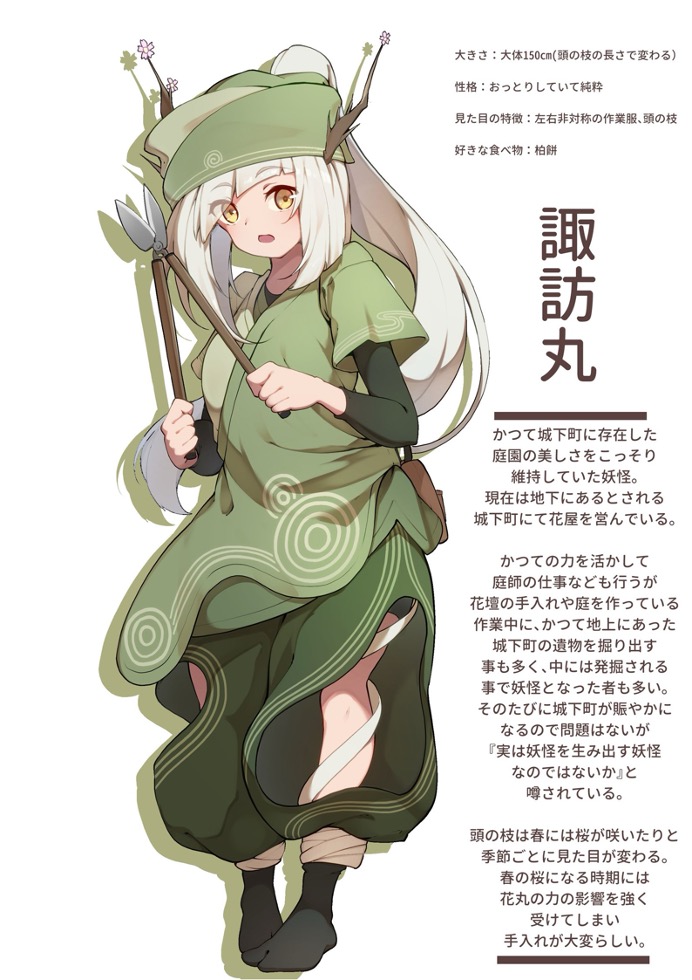
Suwamaru
Junya Ishida
수상HONOURABLE MENTION
응모자Junya Ishida
거주지Inuyama, Aichi
SizeAbout 150 cm (varies with the length of the branch on its head)
PersonalityGentle and guileless
LooksAsymmetric work clothes and a branch on its head
Favourite foodKashiwamochi
A yokai that once quietly kept the gardens of the castle town beautiful.
These days it runs a flower shop in the castle town said to lie underground.
It still puts its old skills to use as a gardener, and while tending flower beds or building gardens it often digs up relics of the castle town that once stood above - some of which become yokai in the act of being unearthed. Each time, the castle town grows livelier, so nobody minds; but there is a rumour that it is "really a yokai that makes yokai."
The branch on its head changes with the seasons, flowering with cherry blossom in spring. When the cherries bloom it falls strongly under Hanamaru's influence, and is apparently a great deal of trouble to keep tidy.
HONOURABLE MENTION
Kenarui
Yoshiyuki Kohigashi
수상HONOURABLE MENTION
응모자Yoshiyuki Kohigashi
거주지Echizen, Fukui
Eat a snack alone and a voice comes from nowhere: "Kenarui. Kenarui."
That is the yokai's voice, and you must not answer it.
Legend has it that a child who once answered "You shan't have any" found the yokai before them, and lost the snack.
Note: kenarui is Fukui dialect for "I'm envious."
HONOURABLE MENTION
Karamon-modoki, the false Karamon
Kazunori Nishimura
수상HONOURABLE MENTION
응모자Kazunori Nishimura
거주지Tsuruga, Fukui
Night after night it stands there looking exactly like the Karamon gate. Mistake it for the real thing and pass through, and you are thrown back in time to the Sengoku era.
Watching people reel at the shock, it breaks into a cheerfully eerie song: "Karakara-monmon, karamonmon!"
HONOURABLE MENTION
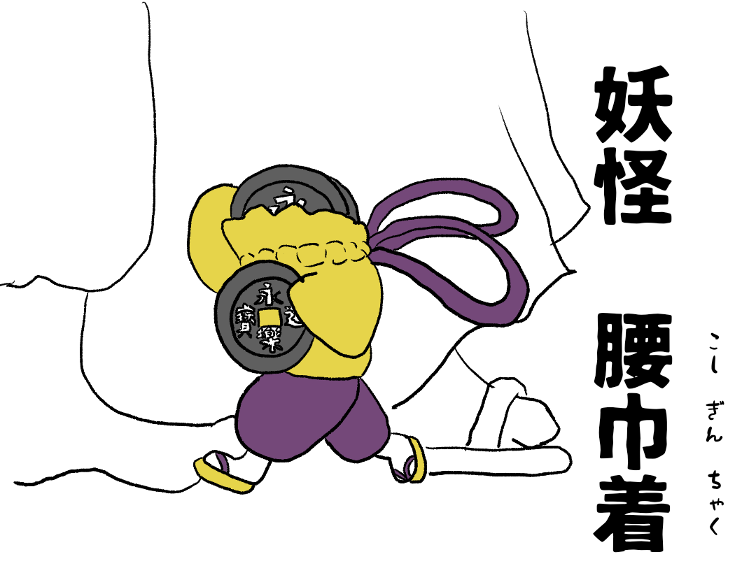
Koshiginchaku, the purse at your hip
Satoshi Kokorotenchi
수상HONOURABLE MENTION
응모자Satoshi Kokorotenchi
거주지Sapporo, Hokkaido
What's the trouble?
Short of the coins you had in your purse?
That'll be the Koshiginchaku's doing.
Jingle your coins about and before you know it there it is, hanging at your hip - helping itself to a little something. That's the Koshiginchaku for you.
HONOURABLE MENTION
Okusune
Ruka Nakayama
수상HONOURABLE MENTION
응모자Ruka Nakayama
거주지Joso, Ibaraki
A yokai that pilfers things.
It likes what is beautiful and vivid, and steals it.
Seen by a human, it vanishes, so it moves at night.
It often slips into wealthy houses, and lives in old, tumbledown ones.
Sometimes a gold coin turns up in a poor household - and so it is said to bring good fortune, and some people call it Okusune-sama.
HONOURABLE MENTION
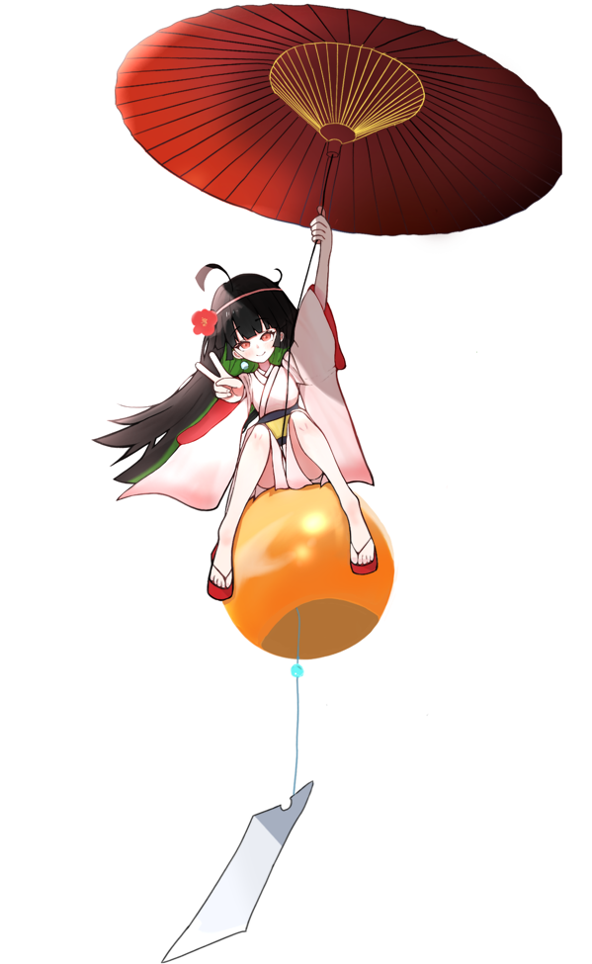
Rinrin
Ryo Teshigawara
수상HONOURABLE MENTION
응모자Ryo Teshigawara
거주지Mitaka, Tokyo
She was originally a wind chime hanging at the Asakura residence.
If you catch a gentle breeze and the sound of a wind chime as you walk through the town, that is her doing.
In a summer she visits, the greenery grows well and the town prospers.
Her favourite place is the garden of the Asakura residence.
HONOURABLE MENTION
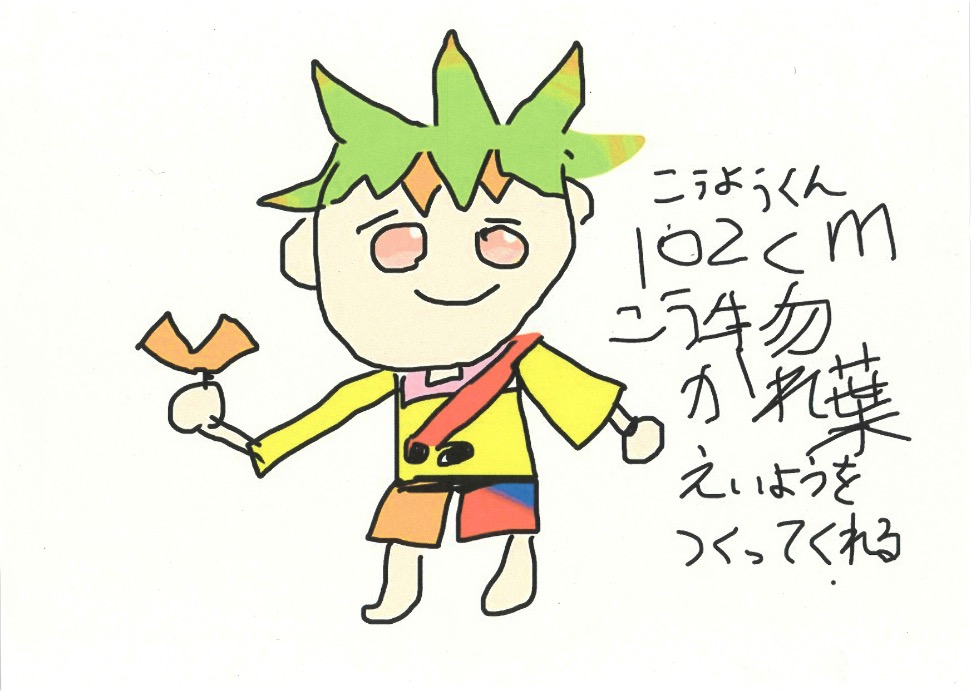
Koyo-kun
Kaito Yoshida
수상HONOURABLE MENTION
응모자Kaito Yoshida
거주지Year 6, Ichijo Primary School, Fukui City
Height102 cm
Favourite foodDead leaves
I drew him thinking of the autumn leaves of Ichijodani, and coloured him in the colours they were at the time; I imagined his clothes the same way.
He appears if you look to your side while watching the autumn leaves of Ichijodani.
As autumn approaches, the colour of his clothes and hair changes.
He makes nutrients.
HONOURABLE MENTION
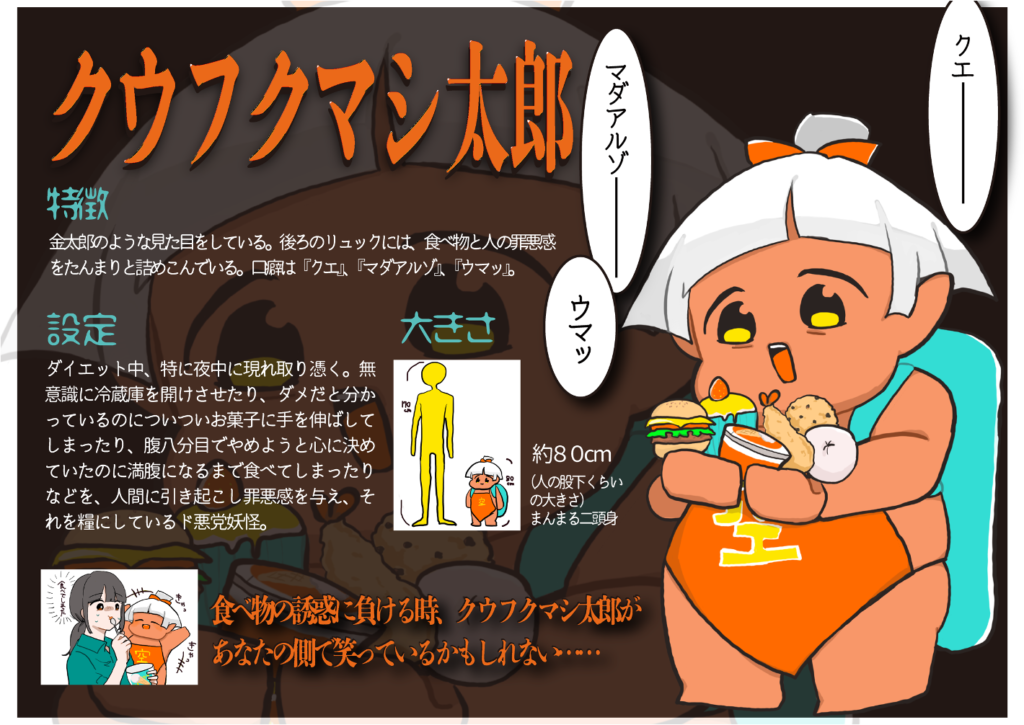
Kufuku-Mashitaro
Mikoto Kimura
수상HONOURABLE MENTION
응모자Mikoto Kimura
거주지Fukuoka City, Fukuoka
He appears while you are dieting, especially in the middle of the night, and takes hold of you. He has you open the fridge without thinking, reach for the snacks you know you should not, eat until you are full when you had firmly decided to stop at eighty per cent - and he feeds on the guilt this brings. A thoroughly villainous yokai.
When you give in to the temptation of food, Kufuku-Mashitaro may well be beside you, laughing.
He looks rather like Kintaro. The rucksack on his back is crammed with food and with human guilt. His catchphrases: "Eat it," "There's more," "Delicious."